E-Mobility
The rear-view mirror, for shared streets.
You wouldn't drive without a rear-view mirror. Knowing what's happening around you is the difference between operating safely and operating blind — in any environment. HINDSIGHT brings that same standard to the e-rider. Built into the lens.
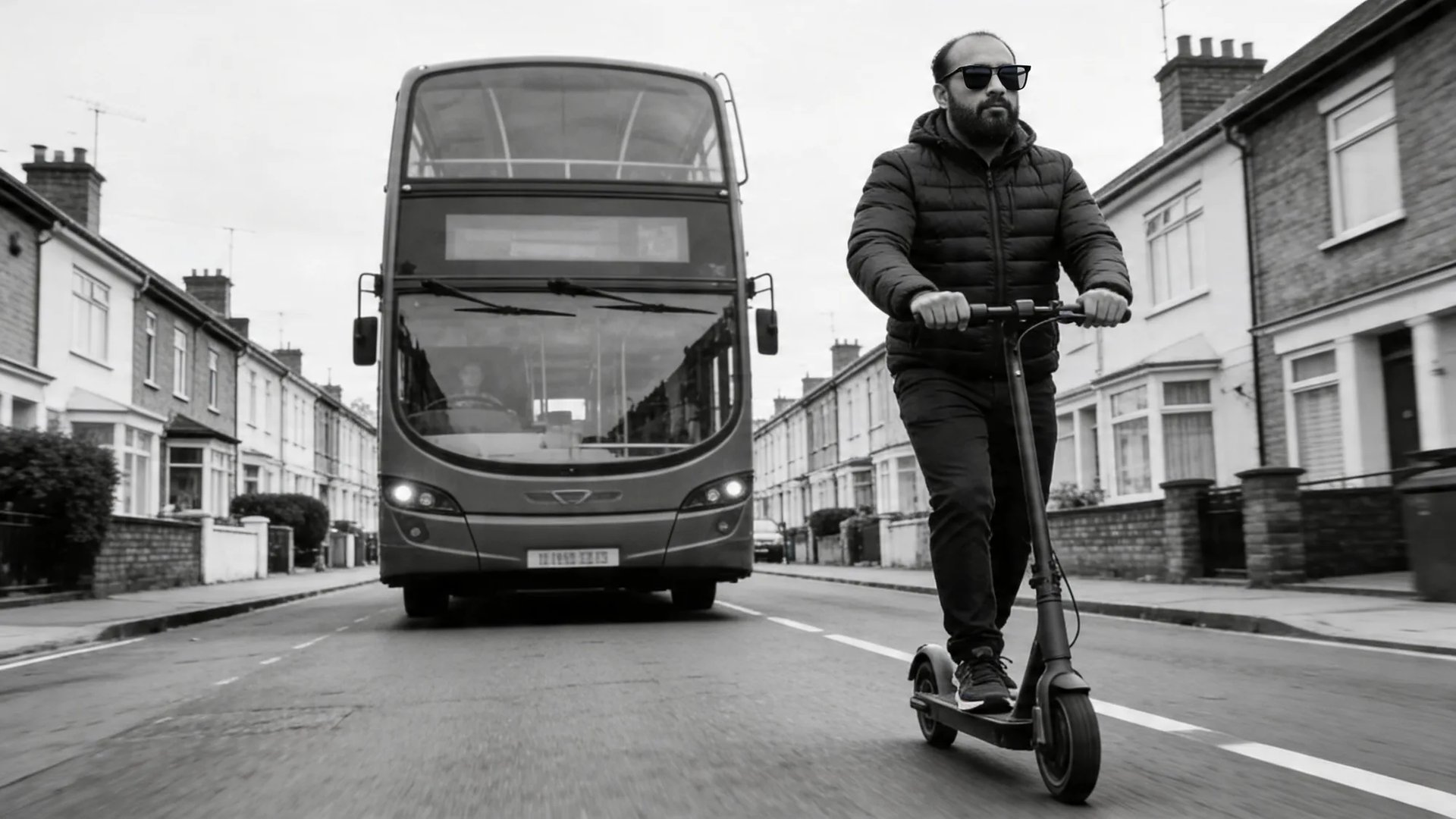
The blind spot you have accepted
Speed without the habit of looking back.
E-bikes and e-scooters arrived faster than the road learned to host them. The shoulder check was never a learned reflex on a kick-scooter. The wing mirror never came as standard.
Closing speeds behind you are two or three times what they were on a pushbike — and so is the cost of not seeing them. 6 e-scooter riders killed and 444 seriously injured per year in the UK (DfT 2024). The category is young; the figures are not.
A car has
Three mirrors. Centre, left, right.
E-rider has had
None, built in. Until now.
HINDSIGHT
The rear-view mirror, built into the lens.
What the lens does for you
The category the lens was built for.
HINDSIGHT was engineered first for cycling and e-mobility — the categories with the speed differentials, the close passes, and the cleanest data.
The flagship certified lenses Artemis and Morpheus are available now, designed around this discipline. The lens is the mirror. The mirror is the lens. No batteries. No screens. No cameras.
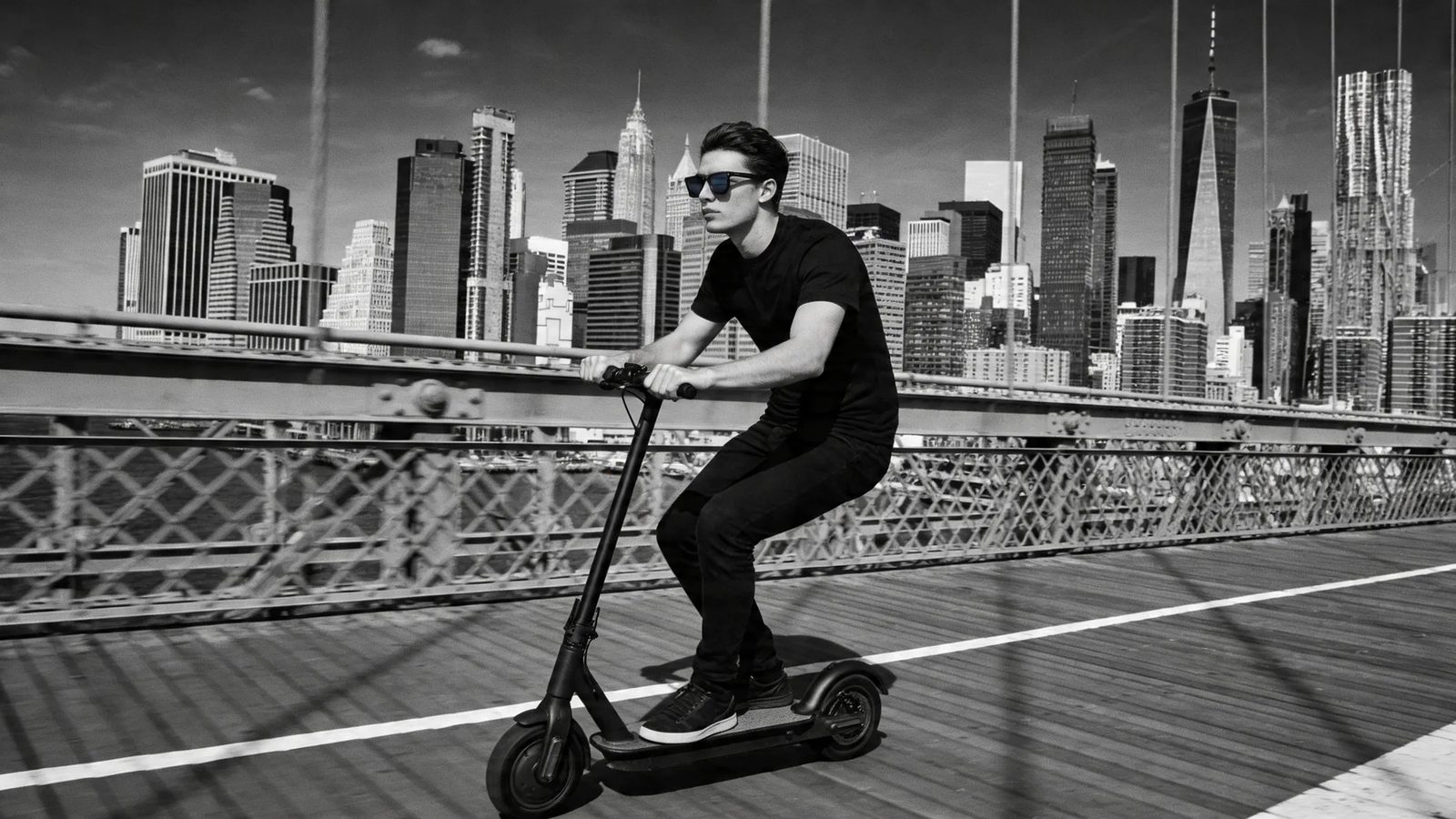
Rear-view, built in
The lens is the mirror. The mirror is the lens.
The research
139 milliseconds faster.
Tested at Edinburgh Napier University.
Research conducted at Edinburgh Napier University measured how wearers respond to hazards approaching from behind, compared to the same wearers using conventional lenses.
Reaction time to a rear hazard was 139 milliseconds faster.
139ms
Faster rear-hazard reaction time
Certified partners
HINDSIGHT certified, for shared streets.
A HINDSIGHT certified lens meets the Complete Perception standard. Look for the certification mark on every partner product.
Flagship — Variable light
Morpheus
The HINDSIGHT certified lens that adapts as the light changes.
Flagship — Low light
Night Lens
The HINDSIGHT certified lens for low-light conditions.
Questions
In plain language.
What does HINDSIGHT do for riders?
Forward and rearward vision, delivered through a single semi-transparent mirrored lens. The mirrored zone is engineered into the lens surface. Forward vision continues through it. Shift focus and the rear-view appears.
Is this a replacement for a mirror accessory?
HINDSIGHT removes the need for an accessory. The mirror is the lens. The lens is the mirror.
Does the rear view distort forward focus?
The Napier study recorded forward vision continuing through the mirrored zone while wearing the lens. The rearward image sits in the natural peripheral field, the way a wing mirror sits in a driver's.
Is there independent research?
Yes. Research conducted at Edinburgh Napier University measured 139 milliseconds faster reaction to rear hazards.
Does it have cameras or electronics?
No. HINDSIGHT is passive optics. No cameras. No batteries. No screens. The lens is the mirror.
Can I get prescription lenses?
Prescription availability depends on the certified partner product. Look for the HINDSIGHT certification on partner sites.
Why does HINDSIGHT matter for e-scooter riders?
Closing speeds behind an e-scooter are two to three times those behind a pushbike. The shoulder check has never been a learned reflex on a kick-scooter and the wing mirror is not standard. HINDSIGHT puts the rear view in the lens you already wear.
Is HINDSIGHT compatible with an e-bike helmet?
Yes — HINDSIGHT certified frames are designed to sit under a standard cycling or commuting helmet without interfering with the strap line or visor.
Will HINDSIGHT help on a city bike lane with vans and buses?
Yes. The HGV blind spot, the white van passing tight, the bus pulling out — all surface in the lens before the rider could turn for them. Forward focus stays where the lane is.
Are HINDSIGHT lenses ISO 12312-1 certified?
HINDSIGHT lens technology is engineered to meet ISO 12312-1 (sunglasses and related eyewear). The exact certifications carried on each partner product are listed on the product page.
Key facts
What HINDSIGHT means for the e-rider.
- 6 e-scooter riders killed and 444 seriously injured per year in the UK (DfT 2024).
- Two seconds with eyes off the road doubles crash risk (NHTSA / Virginia Tech).
- HINDSIGHT was designed for the speed differentials of e-mobility. Flagship lenses Artemis and Morpheus available now.
- Research conducted at Edinburgh Napier University measured 139 milliseconds faster reaction to rear hazards.
- MIPS started niche. It now sits inside 150M+ helmets across 900+ brand partners. That is the trajectory HINDSIGHT is on — niche today, ingredient brand tomorrow, the standard the day after.
Look for the HINDSIGHT certified mark on every approved partner product. The standard is the product. The lens is the proof.
Also serving
Eight more disciplines.
E-Mobility is one of nine categories where HINDSIGHT certified lenses change the standard. The lens is the same. The discipline changes.